Paris · 21 August 1911
The Mona Lisa
A closed Monday. A man in a white smock. One painting gone.
RecoveredBack at the Louvre since 4 January 1914
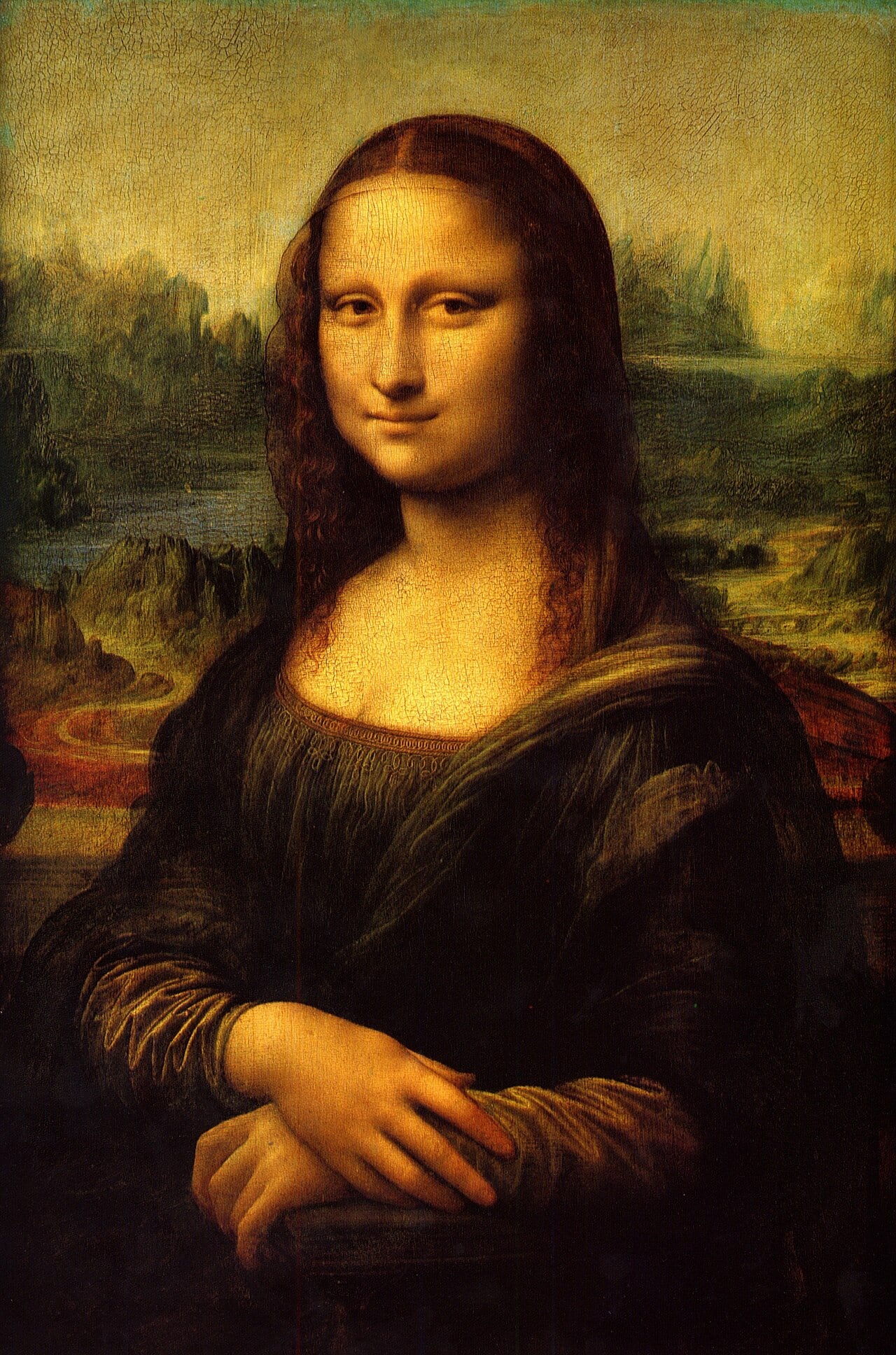
The facts
- When
- Monday, 21 August 1911
- Where
- The Salon Carré, the Louvre, Paris
- Taken
- One painting: the Mona Lisa
- The thief
- Vincenzo Peruggia, an Italian decorator who had worked at the Louvre
- Outcome
- Recovered. Back at the Louvre on 4 January 1914
How it went
About 7 am
By his own later account, Peruggia walks in through the door the workers use. He wears a white smock like theirs.2
The same morning
It is the weekly closing day, and the Louvre is nearly empty. When the Salon Carré is clear, he lifts the painting off its four iron pegs and carries it to a service stairway. He strips off the case and the frame there.2
The exit
A plumber thinks he is an employee and unlocks a service door for him. Peruggia walks out and hides the painting in his Paris apartment.2
22 August
A painter who came to copy the Mona Lisa finds the wall empty. The Louvre closes for a week.1, 2
The suspects
Police arrest the poet Guillaume Apollinaire, who names his friend Pablo Picasso. Picasso is questioned. Both are later cleared.1
Two years
Peruggia keeps the painting in his apartment for two years, then takes it to Italy by train.1, 2
December 1913
He contacts a Florence gallery owner, Alfredo Geri, signing as Leonardo V. Geri calls in Giovanni Poggi, director of the Uffizi, who authenticates the painting. Police arrest Peruggia at his hotel.2
4 January 1914
After more than two weeks in the Uffizi and a tour of Italy, the Mona Lisa goes back to the Louvre.1, 2
The twist
He gets caught trying to sell her to the Uffizi. He serves less than a year.
What came after
Peruggia said he did it for Italy. He told police the painting had been taken from Italy by Napoleon. The court gave him a lenient sentence, and Italy hailed him as a patriot.2
Experts doubt that. A patriot would have given the painting to a museum, not tried to sell it. Four months after the theft he wrote to his father that Paris was where he would make his fortune.2
Wikipedia says the headlines and the police hunt helped make the painting one of the best known in the world.2
Where the sources disagree, and what we left out
- Sources differ on his sentence. One page says six months in prison, the other says one year and 15 days, cut to seven months on appeal. We say only that he served less than a year.
- Some tellings say he hid the painting under his smock. Wikipedia points out he was 160 cm tall and the panel is about 53 by 77 cm, so we leave that out.
- In 1932 a journalist, Karl Decker, published a story of a mastermind and six forged copies. It is one man's account. We leave it out.
- We left out the detective who is said to have written his report leaning on the table that hid the painting, and the thumbprint the police are said to have missed. Both rest on one page.